Weatherproof Boundaries and Terraces: Choosing UK Outdoor Materials for January as Well as July
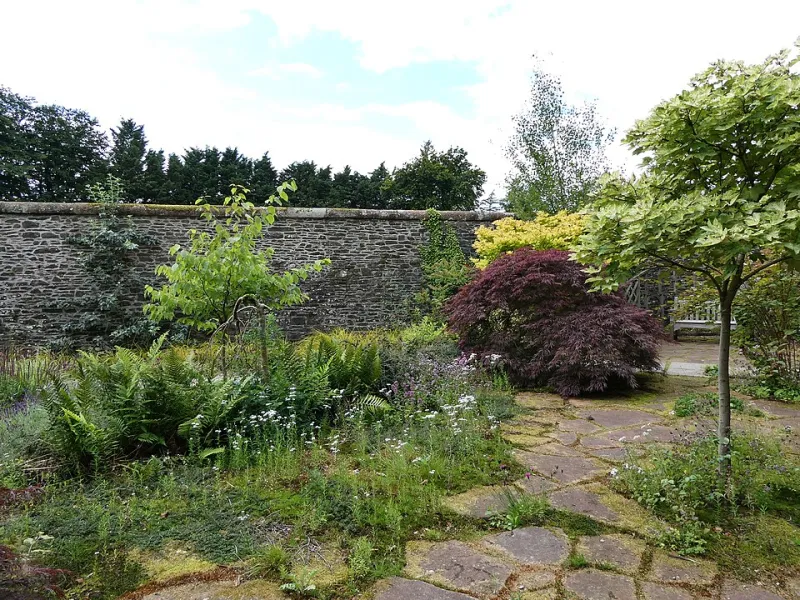
Photo: Billy McCrorie , CC BY-SA 2.0, via Wikimedia Commons
British gardens are often planned from a summer catalogue: warm timber, crisp paving, a neat lawn and long evenings. The test that matters, however, is not July. It is the fourth successive wet January, the frost that lifts a corner of paving, the shaded north wall that turns green by March and the ultraviolet light that quietly bleaches a deck. For homeowners planning outdoor work in 2026, the sensible question is not which material looks best on delivery, but which assembly will still perform after a decade of UK weather.
The four-season test
Any fence, deck or patio is a system, not merely a surface. UK conditions impose four recurring stresses. Frost and freeze-thaw action can move sub-bases and crack rigid materials. Driving rain tests drainage, jointing and fixings. Summer ultraviolet light fades finishes and degrades some plastics. Damp shade encourages moss, algae and mould, particularly on north-facing surfaces and under trees. A material that resists one stress may fail another, so the specification should address all four together.
Timber: traditional appeal with a maintenance contract
Timber remains the default for UK boundaries and decks, and for good reason. It is familiar, repairable and comparatively low in upfront cost. The important detail is the grade and treatment. Fence posts and anything in ground contact should be suitably treated for the exposure, and cut ends should be sealed. Deck boards need gaps and airflow beneath them, while joists should be kept clear of soil and supported on proper foundations. Stainless or coated fixings reduce staining and corrosion.
Timber is not a fit-and-forget material. Decks usually need annual cleaning and periodic oiling or staining; fences benefit from inspection and repair after winter. Closeboard fencing with concrete posts and gravel boards is a robust UK boundary detail, but timber panels still move and weather. Homeowners who dislike maintenance should cost the time, not just the boards.
Composite: lower maintenance, not no maintenance
Composite decking has improved considerably, and it avoids the sanding and sealing cycle associated with timber. It is not, however, maintenance-free. Shaded faces can still collect dirt, algae and mould, and cleaning is required. Boards expand and contract with temperature, so the manufacturer's gaps, joist spacing and fixing details matter. Some early products faded; current ranges vary in UV stability, so check the warranty and colourfastness claims rather than assuming all composite is equal.
Composite can suit homeowners who value consistent appearance and are willing to pay more upfront. It is less convincing where ventilation beneath the deck is poor or where the substructure is underspecified. The hidden structure still has to cope with UK rain and frost.
Porcelain and natural stone: patio surfaces that depend on the base
Porcelain paving is popular because it is dense, low-absorption and easy to clean. Good-quality porcelain can handle frost well, but it is only as good as the base and laying method. It needs a properly designed sub-base, adequate falls away from the house and suitable jointing. Slip resistance should be checked for the intended use, especially around shade and water. Porcelain is rigid, so movement in the base can show up as cracking or loose tiles.
Natural stone, including sandstone and limestone, offers a softer appearance but varies enormously in quality. Some stone is frost-resistant; some is not. Sealing may reduce staining but will not rescue a poor-quality stone or a bad base. Joints can attract moss, and shaded stone may need more cleaning. Both porcelain and stone sit at the higher end of upfront cost, but they can offer long service if the drainage and substructure are right.
Concrete: value, weight and repairability
Concrete paving slabs and exposed-aggregate finishes are familiar, robust and comparatively affordable. They handle frost reasonably well when laid on a proper base with good drainage, though cheap slabs can spall and joints can harbour moss. Pattern-imprinted concrete can look effective initially, but it depends on control joints and a stable sub-base; cracking is difficult to disguise. Concrete is heavy and repairs can be visible, but it is a practical choice for budget-conscious gardens.
Comparing upfront cost and whole-life cost
In broad terms, treated timber fencing and basic timber decking sit at the lower end of upfront cost. Concrete paving is usually mid-range. Composite decking and porcelain paving are higher, while natural stone varies with type and source. The more useful comparison is whole-life cost: timber demands regular maintenance, composite may need replacement after a long service life, and porcelain or stone cost more initially but require less routine work. A cheap installation on a poor base is rarely cheap over time.
Matching the material to the garden and its use
Exposure matters. A north-facing garden with heavy clay and mature trees will stay damp longer than a sunny, free-draining plot. In those conditions, moss and algae will favour timber, stone and shaded composite. Coastal sites need corrosion-resistant fixings. Raised decks need structural design and may require planning or building control input. Fences need wind loading considered, especially on exposed boundaries. Patios should fall away from the house, and drainage should be planned rather than assumed.
What to specify before work starts
Ask for the sub-base specification, drainage falls, fixing grades, ventilation details and the manufacturer's maintenance schedule. For fences, check height limits and any local restrictions. For raised decks and structural work, confirm whether approval is needed. A catalogue photograph is not a specification. The right choice is the assembly that suits the garden, the budget and the homeowner's willingness to maintain it through every season.
A sensible conclusion
There is no universal winner. Timber offers value and character with maintenance; composite reduces routine work at a higher price; porcelain and stone provide durable patios when properly based; concrete remains a practical budget option. Judged across all four UK seasons, the decisive factors are drainage, substructure, ventilation and realistic maintenance, not the finish alone.