Before the Site Goes Quiet: A Disciplined Christmas Shutdown Protocol

Photo by Photo by Julian Tong on Unsplash on Unsplash
A pause should be planned, not improvised
As December advances, the pressure to down tools and finish is understandable. Trades are tired, deliveries become unreliable, and families want the house back. Yet the Christmas break is rarely just a fortnight. A missed inspection, a failed temporary repair or a burst pipe can delay the restart until February, and the cost is rarely limited to the repair itself.
For homeowners and small builders, the useful distinction is between stopping work and closing a site. Stopping is simply the last day on the tools. Closing is a short, documented process that leaves the property secure, the work protected and the next phase ready to resume. Two focused days are usually enough, provided they are diarised in advance rather than squeezed into the final afternoon.
Fix the date and name the responsible person
Agree a formal shutdown date at least a week ahead, and distinguish it from the last day of productive work. The final day should be reserved for isolation, inspection and paperwork, not for finishing a tricky junction or waiting for a late delivery.
Nominate one person to lead the shutdown and one deputy. Record their telephone numbers, along with those of the main contractor, scaffold provider, alarm company and keyholder. Confirm which traders are working up to the final day, which deliveries have been cancelled or redirected, and whether any skip, portable toilet or plant hire extends into the holiday period. A site that is still expecting a delivery on 23 December is not closed.
Water is the first risk to remove
Water causes more January call-outs than any other building element. Where the property is unoccupied, isolate the mains supply and drain the domestic pipework at the lowest points, opening taps to allow air in. Drain external taps, disconnect hoses, and deal with any temporary supply or standpipe. Cisterns and tanks should be emptied where practical, and traps should not be left in a condition where foul air or frost can cause problems.
Heating systems need a considered decision rather than a default one. A drained system is safer in a genuinely empty shell, but it must be refilled and commissioned correctly on return. Where the heating remains live, set frost protection and confirm that the boiler, programmer and any smart controls will continue to operate. Do not assume a building that is warm on the last day will stay warm through a cold snap.
Lag any exposed pipework that remains in service, including temporary supplies, and check that external gullies and rainwater outlets are clear. A blocked outlet during a thaw can send water into exactly the areas the renovation has just dried out.
Close the envelope and check the temporary works
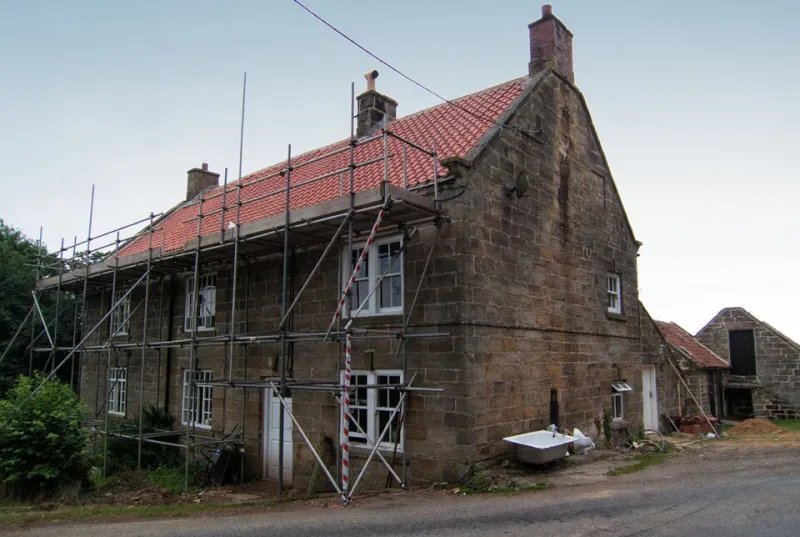
Walk the property from the roof down. Secure or remove loose roofing felt, ridge tiles, flashings and site sheeting. Check roof lights and temporary covers; a tarpaulin that has survived November may not survive a December gale. Confirm that scaffold ties, boards, netting and access ladders are in good order and that the scaffold provider has been asked to inspect where required. Loose poles and unsecured boards are both a safety issue and an invitation to water ingress.
Windows and doors should be closed, locked and checked for temporary seals. Where openings remain, use rigid temporary weatherproofing rather than a single sheet of polythene. Confirm that water cannot track behind the cover and into the building. Internal doors can be left open to encourage air movement, but only where security allows.
Store materials as though frost is certain
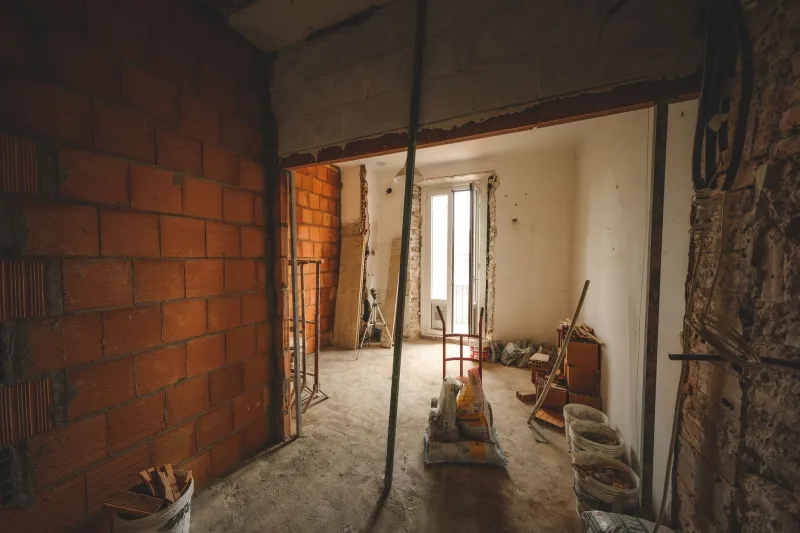
Plasterboard should be flat, off the floor and away from external walls. Timber should be spaced, covered and raised. Cement, mortar, adhesives and paint need frost-free storage, and bagged goods should be kept off damp concrete. Batteries, chargers and small tools should be removed or locked away. Fuel and gas cylinders should be stored according to the manufacturer's instructions and away from occupied areas.
Plant should be immobilised and keys removed. Skip lids should be secured, and loose fixings, tiles and insulation should not be left where wind can lift them. A tidy site is easier to inspect on return and less attractive to opportunists.
Confirm insurance, alarms and access
Many UK household and site policies impose conditions when a property is left unoccupied for a set number of days. Check the wording rather than relying on memory. Confirm whether the insurer needs notification of the shutdown period, whether temporary works are covered, and whether scaffold or plant remains insured over the holiday. Record the policy numbers and emergency contact details in the shutdown file.
Test alarms, replace batteries where necessary, and confirm that any monitored system has current keyholder details. Secure keys rather than hiding them on site. Consider temporary lighting or an alarm on the scaffold if the property is vulnerable, and ask a neighbour to keep a discreet eye on the front and rear elevations. Do not advertise an empty site through uncollected post or open bins.
Leave a restart file, not a memory
The final task is a written handover for the first week of January. Include the date of shutdown, utilities isolated, heating status, temporary works in place, outstanding inspections, deliveries due, scaffold condition and any areas that must not be disturbed. Add photographs of openings, covers and material storage. Note who should be called first and what must be checked before work resumes.
On return, inspect before restarting. Look for damp patches, frost damage, lifted covers and movement around temporary supports. Re-commission water slowly and check for leaks before restoring full pressure. Confirm scaffold and alarms after any storms, and record any defects while they are still fresh. A disciplined shutdown does not guarantee a mild winter, but it turns an unpredictable break into a controlled one and gives the project the best chance of an orderly start to 2027.