Lighting the Facade, Not the Fabric: A Careful Exterior Festive Lighting Method
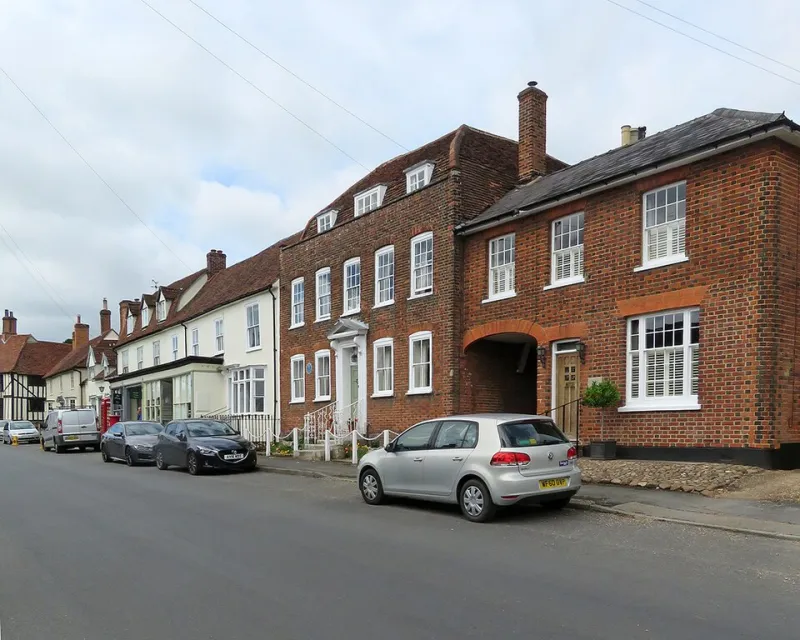
Photo: John Sutton , CC BY-SA 2.0, via Wikimedia Commons
Exterior festive lighting is often treated as decoration rather than building work. In practice, it is a short-term installation on a weather-exposed facade, and the decisions made in late November 2026 will still be visible when the lights come down in January. A careful approach treats the display as reversible equipment: supplied safely, routed without interfering with rainwater management, fixed without damaging the materials beneath, and removed before the worst of the winter frost can exploit any weakness.
Begin with the supply, not the string lights
The first question is not where the lights will look best, but how they will be powered. Any lighting used outdoors should be designed for exterior use and carry a suitable IP rating for the position. Transformers and connection boxes should be kept off the ground, preferably under cover, and arranged so that cables leave them with a drip loop. Water should be encouraged to fall away from the connection rather than run down the cable into it.
Where an existing outdoor socket is used, confirm that it is weatherproof and that the circuit is protected by a 30 mA residual current device. A plug-in RCD unit can provide additional protection for a temporary display, but it should not be used to excuse a poor supply. If a new outdoor socket is needed, or if the existing arrangement is uncertain, an electrician should be asked to check the circuit. The load from modern LED lights is usually modest, but transformers, timers and multiple reels still need to be considered as a whole rather than plugged in one after another without thought.
Cables should not be run through open windows or trapped in doors. A compressed cable can damage both the cable and the door seal, and a seal that no longer sits correctly is an invitation to draughts and rainwater. Where a cable must pass from inside to outside, use a proper outdoor route or a qualified installation rather than a temporary crush point.
Route cables as if water is looking for a way in
The most common avoidable damage from festive lighting is not electrical. It is the slow distortion of gutters, downpipes and door and window seals by cables that have been clipped or hung under tension. Gutters are not a support system. They are fixed to carry rainwater, and their brackets, joints and falls are easily disturbed. Hanging a cable run from a gutter edge can also create a trap for leaves and ice, and the added weight may be enough to pull a joint apart.
The same principle applies to downpipes, fascia edges and door seals. A cable should follow a deliberate route, supported at regular intervals with clips suited to the surface, and kept clear of openings, vents and walkways. Where a cable crosses a wall, leave a small drip loop at the lowest point so that water does not track horizontally into a fixing. Keep connections above ground level and away from areas where they might sit in snow, standing water or leaf litter.
If the route must pass near a gutter, support it independently from the wall or fascia rather than loading the rainwater goods. Avoid running cables across the face of brickwork where they will rub in wind. A little slack is useful, but too much creates a loop that can catch on tools, ladders or vegetation.
Fixings for brick, render and timber
The most reversible fixing is the one that is not needed. Existing hooks, brackets and timber fascias should be used where possible. On brickwork, drilling into the face of the brick should be avoided unless there is no alternative. A small stainless steel screw and a correctly sized nylon plug may be acceptable for a lightweight cable clip, but the hole should be sealed when the fixing is removed. Do not rely on mortar joints as a convenient drilling point; repeated fixings can erode the joint and open a path for water.
Adhesive hooks are popular because they appear to leave no trace. In cold, damp conditions their performance can be unpredictable, and on render or painted surfaces they may pull away the finish when removed. Test any adhesive product on a hidden area first, and follow the manufacturer’s temperature guidance. On timber, stainless steel cup hooks fixed with a pilot hole are usually more reliable than adhesive, provided they are placed where they will not split the grain or interfere with a door or window.
Never hang lights from gutters, downpipes, aerial masts or other services. These are not designed for side loads. For heavier displays, use independent stands or ground-fixed supports rather than transferring weight to the building.
A conservation-area and neighbour check
In a conservation area or on a listed building, temporary festive lights are generally treated differently from permanent alterations, but fixings can still require consent. Before drilling into historic fabric, check with the local authority conservation officer. The same applies to shared walls and boundary structures. Light spill should also be considered: a display that is pleasant from the pavement can be intrusive in a neighbour’s bedroom. Timers, warm-white lamps and downward-facing fixtures reduce nuisance without diminishing the effect.
Removal is part of the installation
Take the lights down on a dry day when the temperature is above freezing if possible. Isolate the supply first, then remove fixings gently rather than pulling cables free. Inspect cables for abrasion and check that door and window seals have not been compressed. Seal any screw holes with an exterior-grade sealant suited to the material, and note any cracked render, loose mortar or spalled brickwork for repair. Store lights coiled loosely in a dry, rodent-proof container, label the transformer and keep the instructions with it. A short removal routine protects both the equipment and the building, and leaves the facade ready for the weather that follows the festive season.